


The existences of problem gamers: Significance, Reasons, and Effects of Video Gaming
By Melon Gaming
Mar 28, 2022, 12:00:00 AM
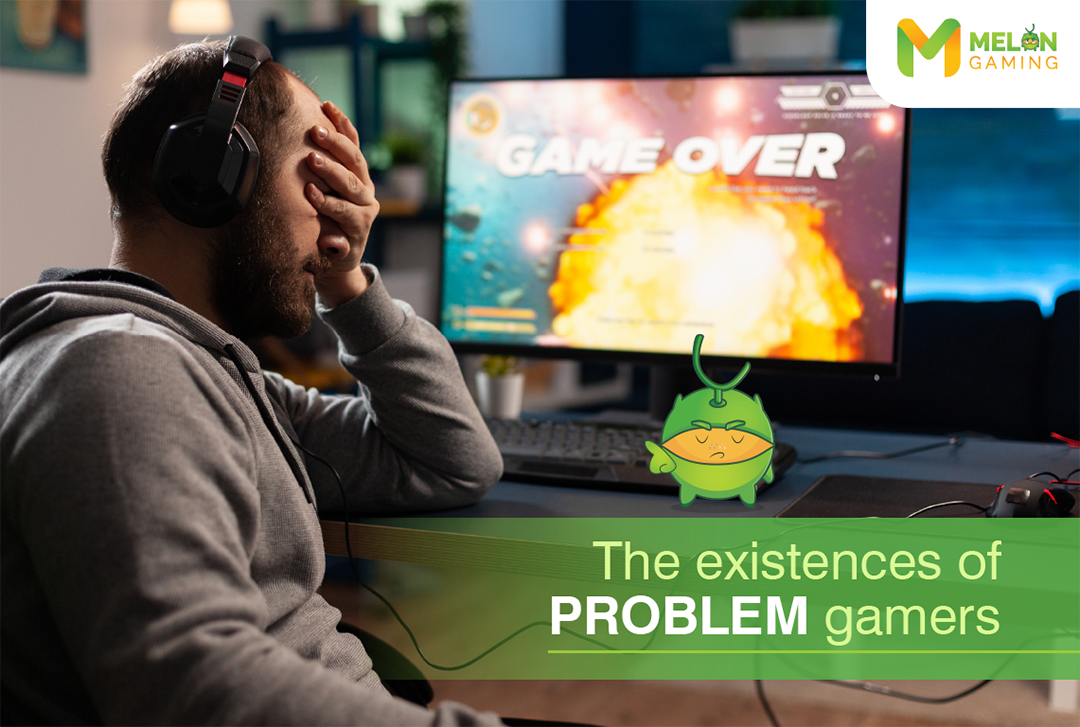
Computer games have been around for a long time, providing entertainment to children and adults. They have come a long way since the early days of PC games and the main forms of Nintendo and Atari. Pixilated screens and limited sound are a thing of the past, as computer games have become more precise than at any other time in recent memory. As innovation advances, so do video games.
Computer game creation has become increasingly complex, and the cost of creating a game to run on one of the major control centers has risen in tandem with this increased complexity. It was once unfathomable to sink millions of dollars into development costs, but today's games can cost tens of millions, if not millions of dollars.
The computer game industry is massive. To be honest, it is larger than the combined film and music industries, and it is still growing. However, unlike the film and music industries, the gaming industry has a global population of over two billion people. That equates to 26% of the total population.
Highlights
- For problem gamers, gaming is a significant and deliberate movement.
- In the lives of gamers, video games provide both positive and negative experiences.
- Negative experiences arose primarily due to using computer games to cope with stress.
- Individual and external factors influence how much gaming is done
- In reality, or for all intents and purposes, the back and forth effects on gaming can occur.
In 2022, the gaming industry generated $155 billion in revenue. By 2025, investigators predict that the industry will generate more than $260 billion in revenue. 1 As a result, tech companies are hoping to participate in this revenue stream. Google (GOOGL), Meta (FB), formerly Facebook, and Apple (AAPL) have all made plans to enter the computer game industry.
Popularity of Video Games
Over the last decade, the popularity of video games has skyrocketed. Approximately half of all Americans play video games on various electronic devices, and 10% of those who play self-identify as gamers (people who regularly play video games and identify with the gaming community) (Pew Research Centre, 2016). A growing body of research has discovered positive uses for video games (Ferguson, 2010), including reducing flashbacks from posttraumatic stress disorder (Holmes, James, Coode-Bate, & Deeprose, 2009), chronic pain reduction (Jones, Moore, & Choo, 2016), and health care professional training (Wang, DeMaria, Goldberg, & Katz, 2016).
Problem Gaming
Problem gaming is defined as a sustained and recurrent involvement in video gaming that causes psychological distress and functional impairment (American Psychiatric Association, 2013; Shapira et al., 2003). Recent longitudinal studies have revealed opposing views on the long-term stability of problem video gaming.
Important Points
- Computer games have been around for a long time, but their popularity has recently grown.
- The computer game industry is larger than the combined film and music industries.
- Monsters of technology Google, Meta, and Apple have all made plans to enter the gaming industry.
- Membership real-time features are the way of the future, and they will be beneficial to video game organizations.
- Specialized advancements, growing business sector socioeconomics, and increased computer game-related stock have all contributed to the computer game industry's new growth.
Streaming and the Role of Technology Companies
Modern gaming companies such as Meta, Apple, and Google are entering the market. The tech industry is looking for ways to make computer game spilling as commonplace as streaming a song on Spotify or a movie on Netflix.
Microsoft (MSFT) is already in the gaming business with its well-known Xbox console. In 2019, the company unveiled Project xCloud, a real-time computer game feature that allows customers to stream Microsoft's Xbox games to PCs or other devices. The assistance will be completely functional in September 2020 and will be accessible to Xbox Game Pass Ultimate subscribers.
Meta began fostering a gaming stage in 2016 with Unity Technologies, which creates a game development system for individuals to create computer games. Google released Stadia, Google's cloud gaming administration, enabling clients to play real-time computer games with incredibly high quality. It is available via Google's program and phones, tablets, and personal computers.
The primary goal of these organizations is to enable players to transfer computer games without the need for a PC or a computer game control center. As this trend continues, purchasing physical computer games in the form of cartridges or plates becomes increasingly appealing.
Membership real-time features are the future and will be valuable to video game companies such as Ubisoft and Electronic Arts, as assembly, transportation, and capacity costs will all be eliminated. Membership administrations have also considered income age to happen consistently, even though games were previously purchased during events and other large event occasions.
Innovations with a Focus
Augmented reality is here to stay. Oculus VR, a Meta subsidiary, intensifies its efforts to improve the nature of the computer-generated simulation headsets it has successfully delivered. Meta purchased Oculus VR for $2 billion in 2014. 3 Meta's most recent contribution is the Oculus Quest 2.
To the extent that inundation is concerned, computer games have effectively outperformed numerous different types of diversion and augmented reality will add another layer. There will also be more trial and error with controls, such as adding voice, touchscreens, and signals to game mechanics as the control center adds peripherals to accommodate those data sources.
Marketing
Because the item is expensive to produce, the computer game industry, like Hollywood, needs to generate more revenue from its licensed technology. Marketing is now on the horizon, with shirts, figures, caps, mugs, and more on the way. The Halo series on Microsoft's Xbox has spread to various types of content via books and comic books, in addition to an upcoming TV series and a well-known film. This could become the model for all successful computer game series to follow.
The well-known computer game Assassin's Creed, created by Ubisoft, was made into a film in 2016 with prominent entertainers. Sega's well-known Sonic the Hedgehog game was adapted into a successful film in 2020, starring notable entertainers, and set the bar for the highest opening weekend for a computer game-based film.
Demographics in the market are changing.
Another pattern in the computer game industry is the market's development in terms of socioeconomics. Individuals are experimenting before and after the event, and the orientation blend is approaching standard. High-level players competing in eSports organizations have gained enough recognition to apply for an expert competitor visa when entering the United States. Gaming has a broad appeal and is still evolving.
Computer games have become so popular that specific players transfer recordings of themselves playing computer games at home and earn hundreds of thousands of dollars as a result. This has evolved into yet another income age segment of the computer game market.
Unusual Video Games
As the world becomes nostalgic and we see reboots and changes to beloved movies and television shows from many years ago, the same is happening with computer games. From the beginning of the industry, classic computer games are highly sought after and have become extremely popular, not only with more experienced players who first encountered the games but also with players of a different generation.
Many organizations have taken advantage of this sentimentality and released updated control center versions. Nintendo (NTDOF), more than any other organization, has successfully capitalized on this interest in retro computer games by releasing the Nintendo Classic Mini and Nintendo Switch. These two control centers consider playing exemplary Nintendo computer games. This has turned into a significant revenue stream for organizations that were present in the early stages of the business.
In general, the computer game industry has been focused on development. Innovations, new controls, and new encounters are not uncommon. As the world spends more time on cell phones, real-time features, and cell phone game playing will become a significant source of income, and large tech companies will hope to use their current structure to reach out.
Socioeconomics of Gamers
The growing socioeconomics of gamers is perhaps the most intriguing change in the computer game industry. With more people messing around, increasing interest in more vivid entertainment, and looking for easier ways to access games, the future of the computer game industry appears bright.
Take a look at the framework requirements
Not all games are viable with a PC. In any case, even if you have the most cutting-edge gaming rig, there's a chance that the game you've introduced will be unplayable because it's too old. Without a doubt, introducing a game designed for PCs 10 or 15 years ago may not perform well regardless of whether your PC has the best specifications on the lookout. You are inverting the equivalent yields the same result. Suppose you have an old Pentium machine and install the most recent first-party shooter game like Far Cry Primal on it. In that case, the subsequent presentation may be excruciating, assuming you can figure out how to install it in any case.
Modify your PC
If your game appears to stammer a lot, it's most likely because your PC can't deliver an adequate number of good-looking edges. This usually happens when a PC's memory for model stacking and design delivery falls short.
The most important thing you can do in the current situation is to close unnecessary projects hoarding valuable assets such as memory and CPU. If you have a slower PC, shutting down other dynamic projects may not be enough, so use the Task Manager to see other foundation programs you can disable. Constant output security programming can consume a lot of CPU transmission capacity, so try to turn it off briefly. Try to betray after you've finished playing.
Lack of understanding
Currently, there is a lack of understanding of how problem gaming affects gamers' daily lives. The purpose of this study is to gain a more holistic understanding of the activities in the daily lives of problem gamers, specifically what is important to them, what motivates gaming, and what supports/restricts participation in other life activities.
Semi-structured interviews and week-long activity logs were used to gather information from the 16 problem gamers from five countries. Thematic analysis was used to examine qualitative data. Two overarching themes emerged. For starters, gaming was discovered to be a meaningful and purposeful activity. Participants in this study were aware of the activities that provided them with a sense of meaning and personal growth. In the lives of gamers, video games provide both positive and negative experiences.
Results
The negative experiences were primarily the result of using video games as a coping mechanism for other life stressors. Second, individual, interpersonal, and environmental factors all worked together to push and pull on the amount of gaming. Push and pull influences on the amount of gaming can occur both physically and virtually. Problem gamers may benefit from assistance in minimizing/removing pull forces and obtaining adequate push forces to enable their desired participation in daily activities.
A three-year longitudinal study of adolescents in Sweden discovered that problem gaming remained relatively stable over time (Vadlin, Aslund, & Nilsson, 2018). A 5-year longitudinal study of adults in Canada found contradictory findings from Vadlin et al. (2018), who discovered that problem gaming is transient for most gamers (Thege, Woodin, Hodgins, & Williams, 2015). Furthermore, a correlational panel study of German adolescents discovered that excessive gaming is frequently episodic, appearing and disappearing quickly from one's life (Rothmund, Klimmt, & Gollwitzer, 2016). Gaming as an "occupation" and its influence on the function